Almedia: Berlin startup breakdown
Paid collaboration with Almedia. They verified facts only; all writing and analysis are my own.
Almedia is a Berlin-based adtech company founded in 2020 by Moritz Holländer at the age of 18. What’s impressive is that he started with a €30k loan from his father during the COVID lockdown and built it into Europe’s 3rd fastest-growing company (per Financial Times FT1000 2025). All without investors.
They run Freecash.com, a marketplace where 50+ million users earn real money by playing mobile games and completing surveys. In August 2025, they made their first acquisition, buying German cashback platform zave.it to expand beyond mobile gaming into retail rewards.
They are now at 130+ employees and want to expand even more to become the second German bootstrapped unicorn after Check24. Their 2024 valuation was $167M.
What do they actually do?
They are in the business of rewarded user acquisition, which basically means “Get paid to try new apps and games” for consumers and “Buy users who stick around” for advertisers.
Here is how it works:
- For advertisers (mostly mobile game developers): Instead of paying Meta €2-5 per app install, where most users quit after one day, you pay Almedia to show your game to their 50+ million users who are actively looking for new games to try. You only pay when users complete specific objectives, for example, install and reach level 10, or play for 30 minutes, etc.
- For consumers: You register at Freecash.com and earn cash/gift cards by playing mobile games, taking surveys, and trying new apps. For example, you might earn €2 for reaching level 10 in a game, or €15 for completing a 20-minute shopping survey. Once you hit the minimum payout threshold (€5-10), you withdraw via PayPal, Amazon gift cards, crypto, or other methods.
Almedia takes a commission and passes the rest to users as rewards. Their platform optimizes matching between advertisers and users to maximize completion rates. They claim their users deliver 2x better 180-day return on ad spend and 3x higher average revenue per user compared to traditional channels.
How do they make money?
It’s based on performance-based commissions. They only earn money when users complete advertisers objectives.
Here’s an example:
- Advertiser sets up campaign: “I’ll pay €5 for each user who installs my game and reaches level 10”
- Almedia takes a share of that payment and offers the remainder to users as a reward.
- When the user completes the objective, the advertiser pays €5; Almedia keeps a portion, and the user receives the rest.
No completion means no revenue for anyone. This aligns incentives across all three parties. In comparison to Meta or Google, where you can set up campaigns yourself, the campaign setup is a bit more complicated and tailored for each advertiser.
The model must have been very capital-efficient with great unit economics, because they were able to grow to 50+ million users without taking any outside capital. This also gives them much more flexibility in strategy and pricing.
Are they solving a real problem or just riding a trend?
They are solving a real structural problem for marketers. Performance marketing has been disrupted by privacy restrictions (Apple’s IDFA deprecation, ATT, and the collapse of third-party cookies). This made deterministic targeting and user-level attribution much harder. Advertisers can no longer reliably measure or optimise campaigns the way they did in the past.
Instead of guessing who might engage, users explicitly opt in for a reward, leading to higher completion rates and more predictable ROAS. For advertisers, this is a cleaner value exchange: pay only when a user delivers on a measurable objective. For consumers, it’s less disruptive (fewer “ads” in the traditional sense) and transparent.
Is there a but? Yes. If you pay a user, it might mean they might only engage for the payout, not genuine interest, which can be problematic in long-term retention (advertisers could complain or see rewarded UA as low-quality traffic). Another challenge is fraud and farming, and, for mainstream expansion, the vertical fit (better for gaming than fintech for example).
But the biggest risk is probably changes to the Google Play Store and App Store policies and in-app monetisation rules. If rewarded UA would eat too much of their cake, they might get defensive.
How’s the employee vibe?
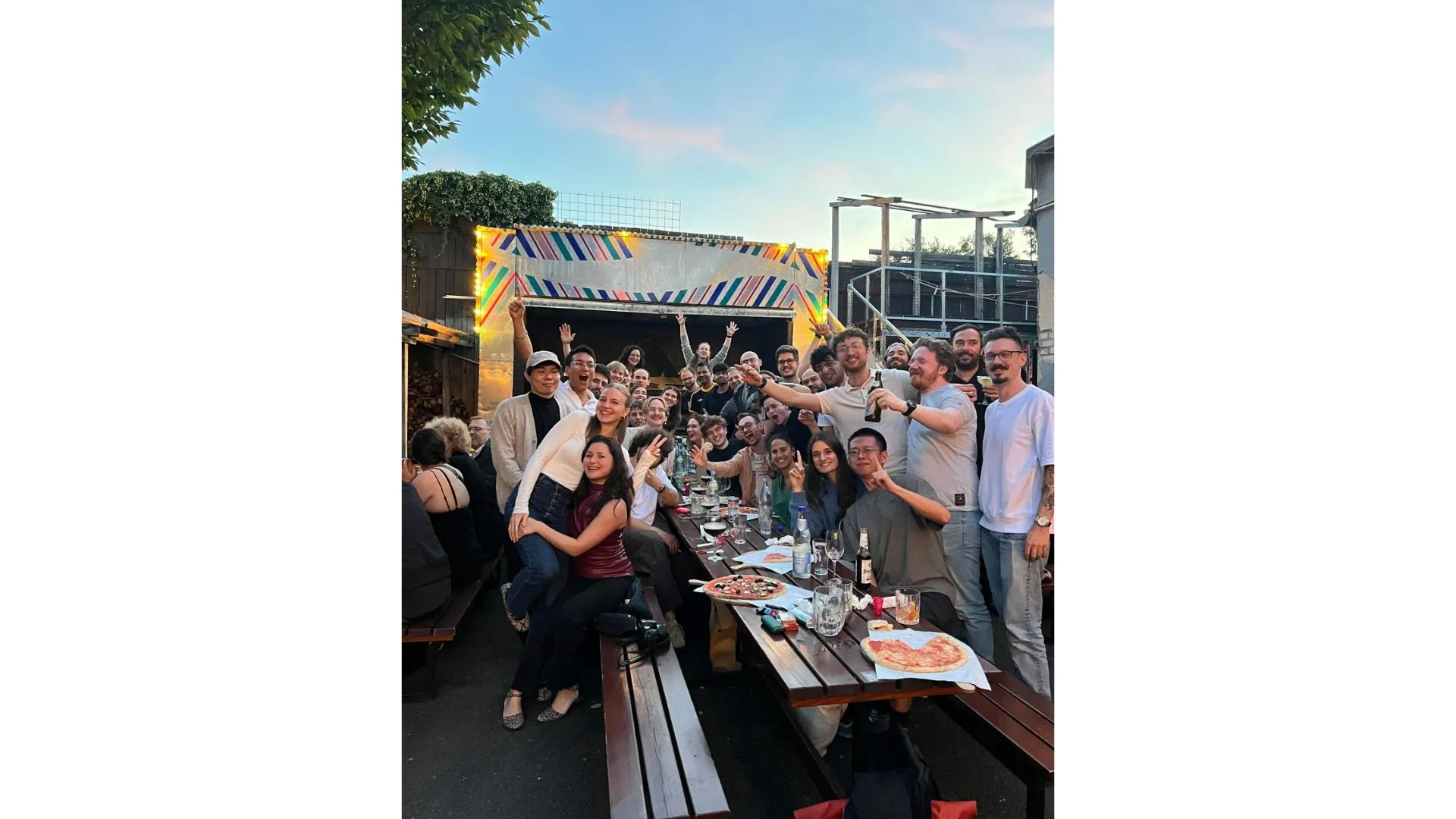
Glassdoor shows 3.9/5 stars from 21 reviews, with 74% willing to recommend the company. That’s ok, but nothing amazing. I’ve visited the office and have seen mostly busy and happy faces. From what some of the employees told me, the vibes are chill, but demanding.
Senior leadership is sharing their knowledge, and it often happens that former employees start their own ventures, which is probably related to every employee carrying a lot of responsibility for their topics.
What would surprise you about working there?
Your boss boss will be someone younger than most new hires. The founder is 23 and started the company at 18 with no prior work experience. They’ve also achieved extremely fast growth (130+ employees with big expansion plans, for example, opening an office in Japan and China) in a fast-moving industry with great potential. The advertising industry is projected to become a trillion-dollar industry in the 2030s.
What’s pretty rare for post-COVID Berlin and startups is a fully in-office policy, 5 days a week. This means they need to spend a lot of money on their employees, and you can see it in the office: snacks and other goodies are very rich and far from your typical Berlin “fruit basket” and they regularly organise off-sites for the whole company (last one was in Marrakesh).
Besides wanting you in the office, they also expect you to show initiative and push beyond the ordinary 9-5. They told me they want to bring a bit of Silicon Valley culture to Berlin.
They’re also extremely selective about who they hire. The interview process includes 5 rounds, and candidates who make beyond the case study stage, receive paid compensation for their time. This signals two things: they respect candidates’ time investment, and they’re protecting their culture rather than just filling the positions quickly.
For this, they are ready to pay the following (some examples from Oct 2025):
- Founder’s associate: €70-90k
- Senior Sales Manager - Gaming Partnerships: €65-80k
- Principal backend engineer (Node.js): €95-125k
- Staff frontend engineer: €100-120k
- Principal product manager: €100-130k
- Partnerships and strategic growth projects manager: €150-180k
They plan to publicly reveal salary bands for all their positions in 2026. You can check their current open positions here. For their very active LinkedIn page, go here.
Who runs the place?
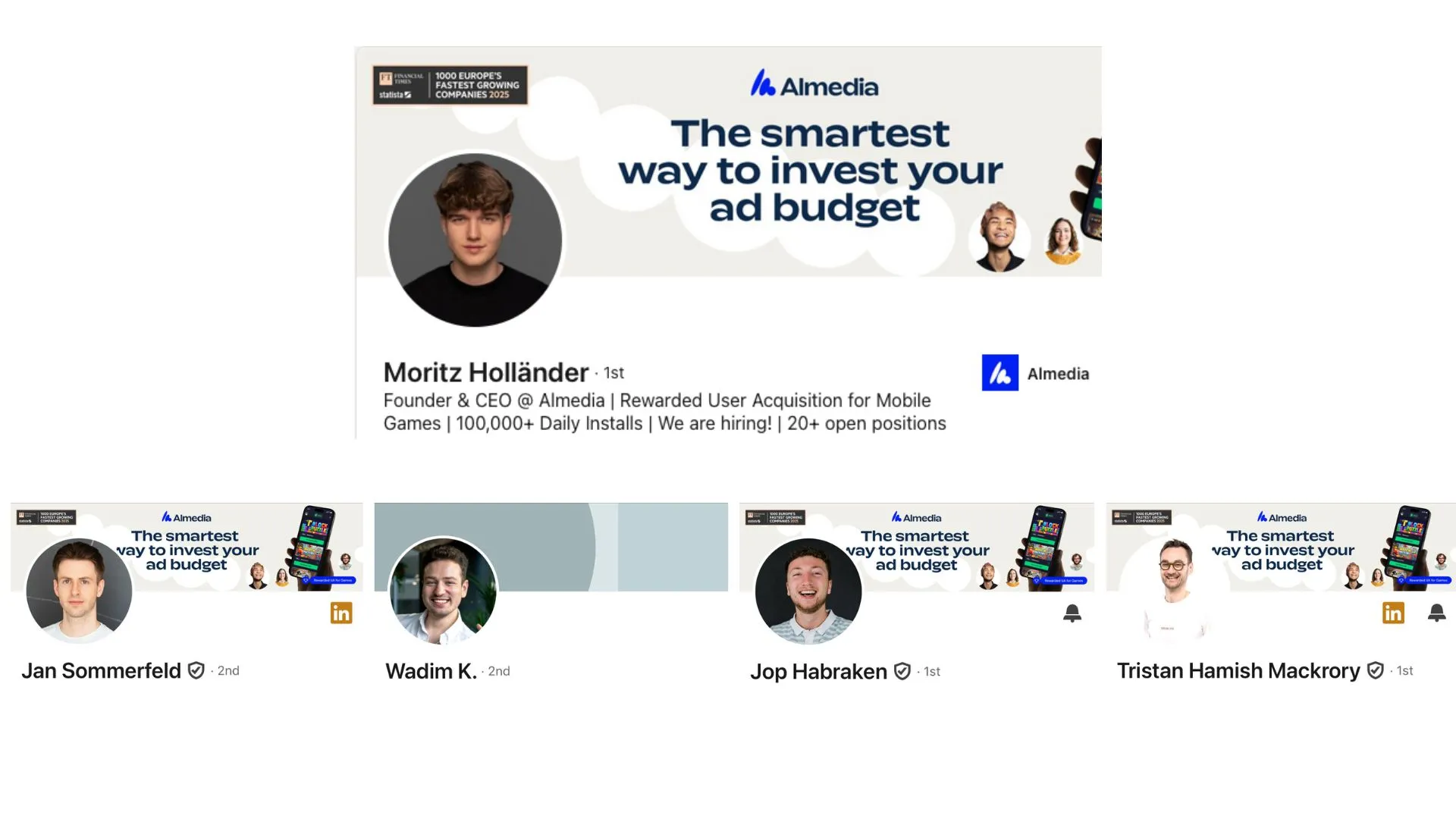
Moritz Holländer, 23, founder and CEO. He’s proven strong in product, growth, and execution, now focusing on management and organisational design. He is supported by:
- COO Jan Sommerfeld brings extensive operational experience as a serial founder with deep operational expertise.
- CTO Wadim Kalmykov, a former trader and founder of a couple of startups.
- VP Product Jop Habraken, an entrepreneur and a founder, former YouTuber.
- VP of People & Talent Tristan Hamish Mackrory, an experienced leader with Silicon Valley scaling experience.
With the recent expansion, they are now bringing even more experienced people on board.
The main risk (or advantage?) is they have no board of directors or experienced advisors mentioned publicly. A lot of weight is on the shoulders of Holländer, but he is getting support from his C suite and advisors in the background.
What’s one thing they’re doing better than competitors?
They are profitably bootstrapped (as opposed to some of their VC backed competitors) and are much more focused on one thing as opposed to their bigger rivals (Unity and their acquisition, ironSource). By current standards, profitably bootstrapping a tech company to 130+ employees and €100M+ revenue is almost unheard of (considering their growth rates, the revenue could actually even be much higher by the time you read this article). An exceptionally rare feat which gives them strategic flexibility and the ability to make long-term bets.
What’s their biggest red flag?
Platform risk. If Almedia captures too much advertiser spend, dominant platforms like Google or Meta could restrict rewarded ad formats, raise costs, or introduce competing products
Key risks beyond the red flag:
- Single-founder concentration risk: other stakeholders and checks exist, but the founder’s central role in key decisions creates risk. It’s unclear how well the team would function without him or during strategic disagreements.
- Scaling strain: moving from 130 to 200 employees will put additional stress on their management systems.
- International expansion: entering new markets adds legal, tax, and operational complexity
- Consumer trust: bans, payout issues, and slow support suggest fraud prevention sometimes catches legitimate users.
Gut check: Would you tell a friend to work here?
I’d say it depends on the friend.
It’s a very good fit for someone ambitious who wants fast learning, doesn’t mind staying at work longer, has the wish and ability to be in charge of their topic, can tolerate changes of directions and values profit-sharing upside over stability.
But it’s a bad fit for someone who wants remote or hybrid work, clear structure and to-dos, predictable hours and work-life balance.
In a nutshell: Almedia is good. Profitable, fast-growing, and solving real problems. But it has classic bootstrap (or should I say fast-growing-startup?) challenges: first-time management, operational inconsistency, and heavy founder dependency. For the right person, it’s career rocket fuel. For the wrong person, it’s probably burnout or mutual termination after a couple of months.
You can check their current open positions here. To get some ideas for your interview questions read this article.
For more like this… subscribe ⤵️
Frequently asked questions
What is Almedia and what does the company do?
Almedia is a Berlin-based adtech company founded in 2020 that runs Freecash.com, a marketplace where users earn money by playing mobile games and completing surveys while advertisers get performance-based user acquisition.
How does Freecash work and how do you earn money on it?
You register at Freecash.com and earn cash/gift cards by playing mobile games, taking surveys, and trying new apps. You withdraw via PayPal, Amazon gift cards, or crypto once you hit the minimum threshold.
Is Almedia profitable or venture-backed?
Almedia is profitably bootstrapped with no outside investors. It was started with a €30k loan from the founder’s father.
Does Almedia offer remote work or is it office-based?
Almedia has a fully in-office policy, 5 days a week. No remote or hybrid work is offered.
Who is Moritz Holländer and how old was he when he founded Almedia?
Moritz Holländer is the founder and CEO of Almedia. He started the company at age 18 in 2020.
How many employees does Almedia have in 2025?
In October 2025 Almedia had 130+ employees with plans to expand further.
What are the interview stages at Almedia and do they compensate candidates?
The interview process includes 5 rounds. Candidates who make it beyond the case study stage receive paid compensation for their time.
What was Almedia’s valuation in 2024?
Almedia’s 2024 valuation was $167M.