
Payrails: Berlin startup breakdown
Payrails was founded in 2021 by three ex-Delivery Hero payments engineers who got tired of watching enterprises struggle with payment chaos. After raising over $52M across multiple rounds (including a $6.4M seed led by the famous Andreessen Horowitz and a $32M Series A in June 2025), they’re buildpaing what investors call the “SAP of payments” - a unified platform that lets big companies actually manage their payment mess through one interface instead of juggling dozens of different providers.
What do they actually do?
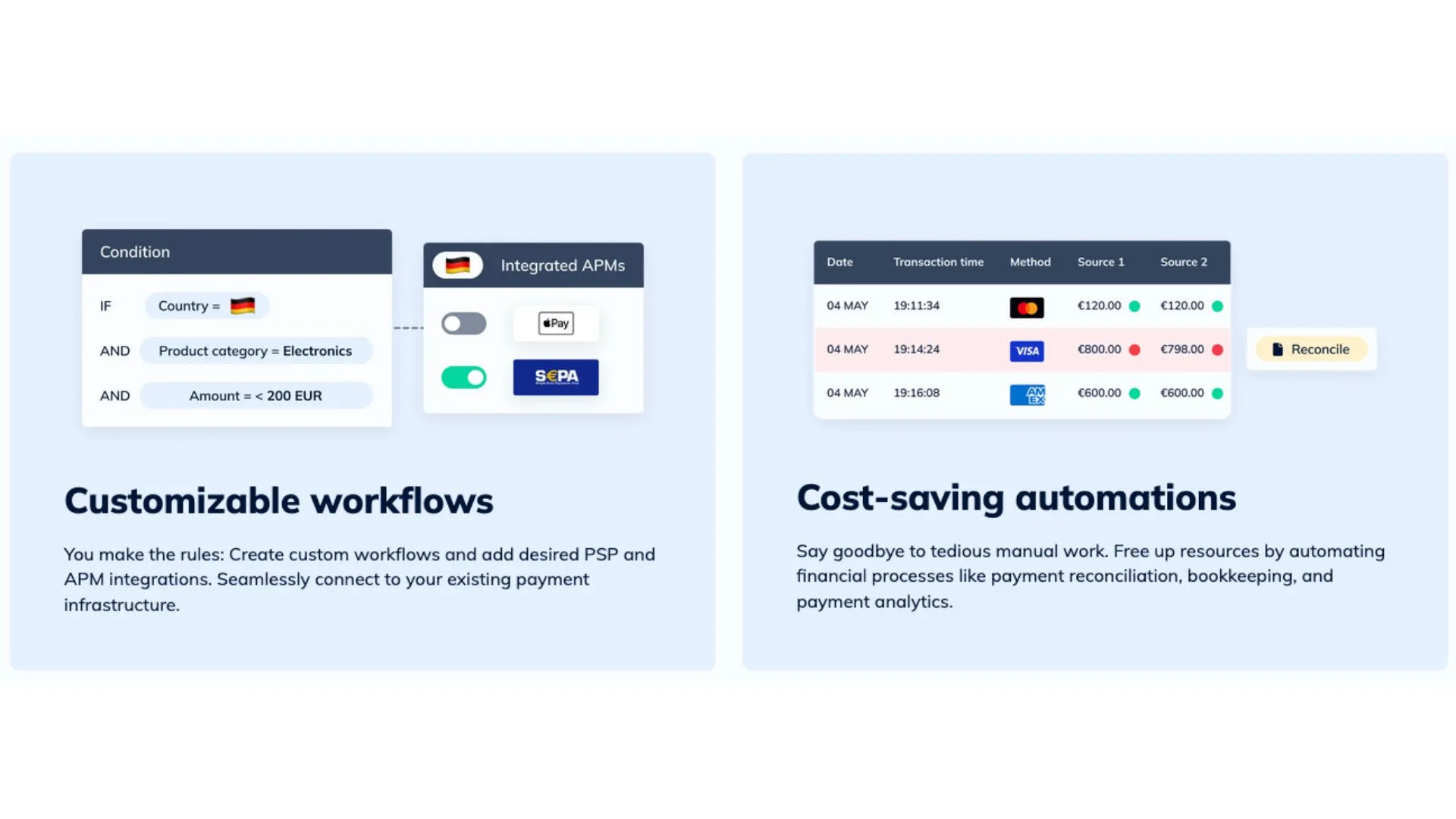
Think of it this way: instead of needing 15 different payment tools (Stripe, PayPal, Adyen, local bank gateways, fraud detection systems, reconciliation software) that don’t talk to each other, companies get one dashboard to handle everything - from processing transactions to managing refunds to tracking money flows.
They are the control centre that sits between a company’s checkout and all the payment providers (Stripe, PayPal, local banks, etc.), automatically routing transactions to whoever will process them best and cheapest.
How do they make money?
Pure B2B SaaS model - they charge enterprises subscription or usage fees to access their platform. Their customers are big names like Puma, Vinted, Flix, and Just Eat - companies processing serious transaction volume who can justify paying for a premium solution.
They’re targeting $10M+ revenue companies that process enough payments to make the ROI obvious when Payrails reduces their payment failures and reconciliation headaches.
Are they solving a real problem or just riding a trend?
Both, honestly. The problem is very real. Imagine your own Excel spend and income tracking overview with transactions at three different bank accounts and multiply it by thousands. Every global company using multiple payment providers has the pain of managing different APIs, reconciling transactions across systems, and dealing with failed payments.
The founders had the chance to experience this pain while working with Delivery Hero’s payment infrastructure (that’s also possibly one of the reasons they were able to convince such prominent early investors).
But “payment orchestration” is also one of the hottest fintech buzzwords. Stripe, Adyen, and dozens of startups are all claiming to solve the same problem. Since the problem is real, the space is crowded, so execution and differentiation matter more than the idea itself.
Since they already landed important customers (Puma, Flix, Vinted, Careem), it seems they are doing at least some things right.
How’s the employee vibe?
If you check Glassdoor, it’s brutal. Keywords aren’t really flattering: “toxic,” “fear-driven” culture with heavy micromanagement and “zero work-life balance.” But the number of reviews (13) is way too low to take it seriously, because it’s usually the disgruntled employees (or HR) who put in the effort of reviewing.
The company is currently in scaling mode, growing fast after raising its Series A, which means a lot of opportunity to improve the vibes, but also a chance to completely derail. In any case, they surely have many brilliant people working on hard problems, which can often mean that work-life balance and culture will be taking a back seat.
If you joined tomorrow, what would you learn fast?
I can only imagine you’d need to be able to swim very fast. Even a very stable and documentation-driven company in the payment space, Stripe, is struggling with documentation (e.g, describing something in their docs that cannot be found in the Dashboard), so I can imagine the situation being similar.
You’d probably be asked to make decisions and suggestions fast. You’d be free to run with your ideas, while hopefully not being totally dominated by the negative parts of “founder-led” mentality, which can sometimes actually be holding the company back. International clients mean scaling complexity and complex compliance requirements.
What’s their hiring situation right now?
They are actively hiring across multiple locations - Berlin, Dublin, and Cairo. At the time of this writing, they had 35+ open positions. A lot is going on in sales and technical teams, and it looks like they do a lot of engineering from Cairo.
Based on the existing size of the company (104 according to LinkedIn), these are big numbers which need to be managed very delicately. Scaling employees and surviving is one of the hardest things to do in the startup world.
Check their open positions here.
Who runs this place?
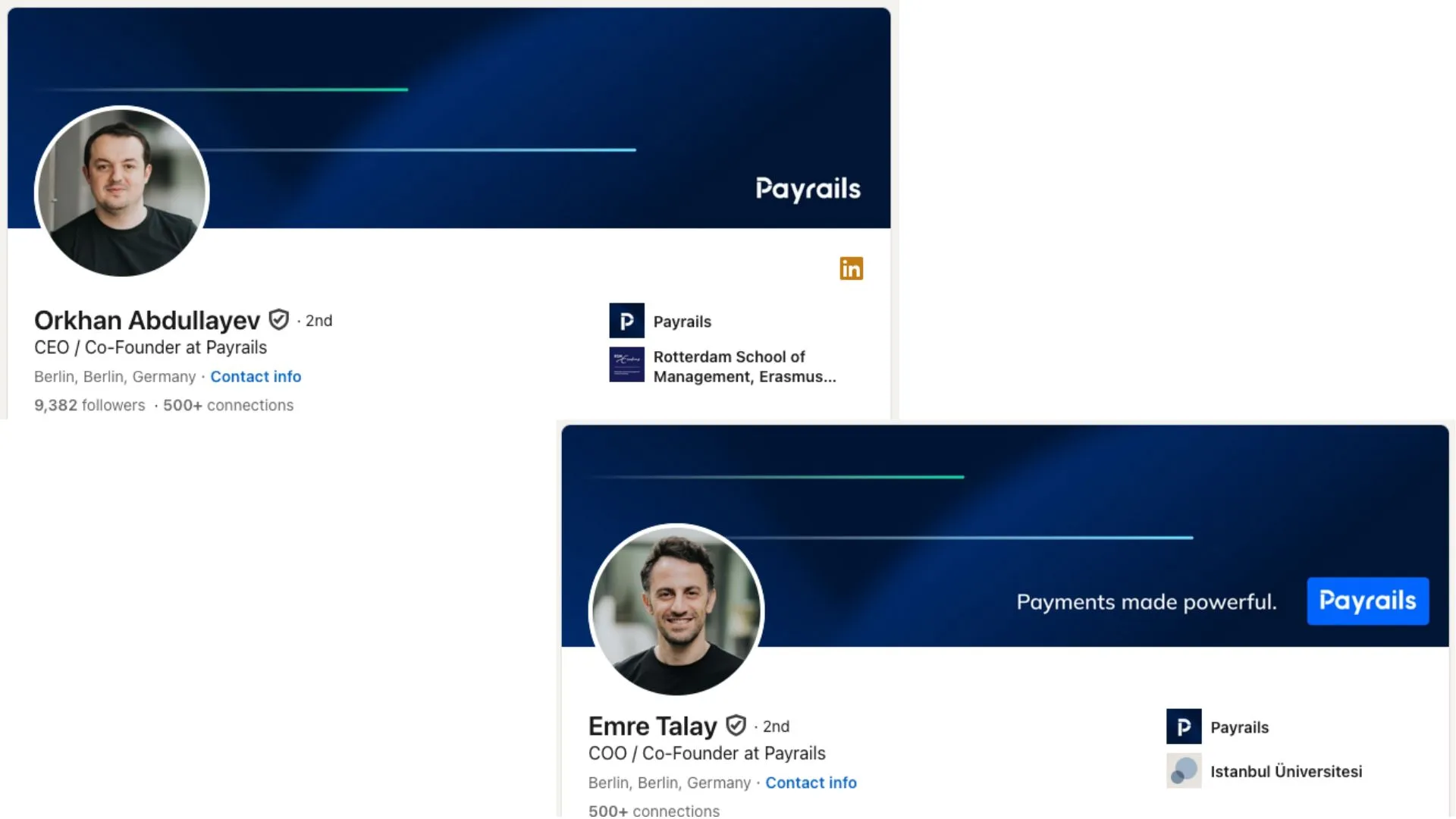
Payrails was founded by three ex-Delivery Hero payments engineers/leaders: Orkhan Abdullayev (CEO), Emre Talay (COO), and Nicolas Thouzeau (he left the company in Dec ‘23). They spent years building payment infrastructure for a global food delivery giant, so they knew what the problems inside out. Both remaining co-founders are experienced but have no prior exits.
Their recent hires show ambition: the new CRO comes from Stripe, the CTO from Miro, and the VP Finance from Delivery Hero. They do like to hire from Delivery Hero: both CTO and VP worked there before.
What’s one thing they’re doing better than competitors?
Their “full-stack payment operating system” approach. Competitors offer point solutions (or are too big and focus on several different things), but Payrails aims to handle everything from transaction processing to ledger management to analytics in one unified system. Their founders actually built this type of infrastructure before, giving them credibility that they can pull it off at scale for others as well.
What’s their biggest red flag/challenges?
Probably their fast employee growth in relation to the culture. The cultural issues are concerning if the Glassdoor reviews reflect reality. High turnover and “toxic” management styles can kill execution, especially in competitive markets requiring top talent.
They’re fighting giants like Stripe and Adyen, who are adding orchestration features to existing products. Enterprise sales cycles are long and expensive, and if the market shifts toward incumbent solutions, growth could stall quickly.
Gut check: Would you tell a friend to work here?
Depends on the friend. If they’re a (payments) engineer who wants to work on genuinely hard problems with smart people and can handle high-pressure environments, absolutely. The technical challenges are real, the market opportunity is massive, and the founding team knows what they’re doing.
If they value work-life balance, structured onboarding, or collaborative cultures, probably not. This feels like a place where you’ll learn tons and be able to really make impactful decisions, but won’t be clocking out on Friday at 15.00.
But who knows: you should definitely ask about it in the interview. You can get some ideas for your questions from this article.
For more like this… subscribe ⤵️